Vesta EP
'4-Vesta’ est le plus brillant des astéroïdes visible depuis la Terre. Mesurant environ 500km de diamètre, c’est l’une des quatre plus impressionnantes entités de la
ceinture d’astéroïdes située entre Jupiter et Mars. Quelques-uns de ces fragments ont été retrouvés sur notre planète, sous forme de météorites éjectées depuis l’espace après deux collisions, laissant d’énormes cratères à sa surface. Ceux-ci témoignent de ce qu’était probablement Vesta, autrefois : une planète elle-même, composée du même matériau que les quatre terrestres de notre système (Mercure, Vénus, Terre et Mars).
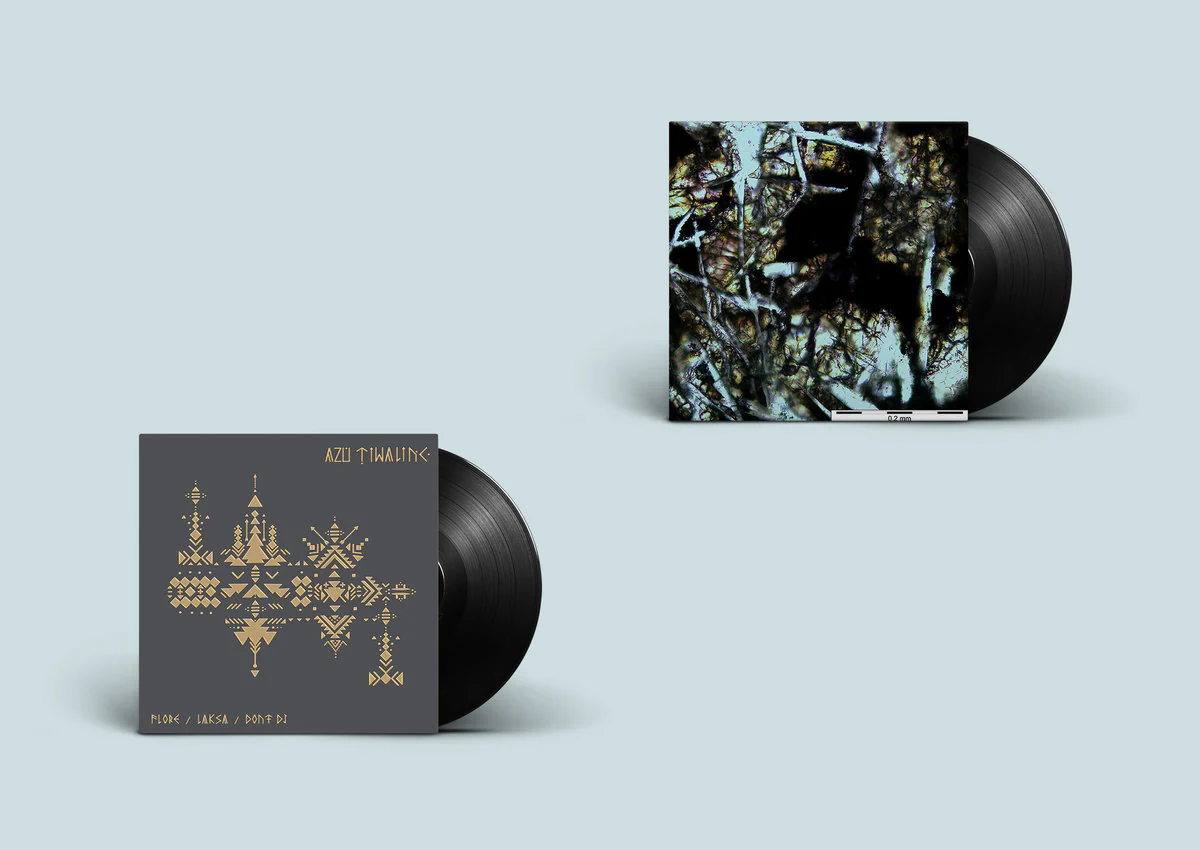
C’est une rencontre avec l’un de ces fragments, qui a inspiré le nom du dernier EP d’Azu Tiwaline, pour I.O.T Records. ‘Vesta’ contient des morceaux écrits et enregistrés à la même époque que ‘Magnetic Service’, son premier EP pour Livity Sound. En tenant dans ses mains un morceau de Vesta trouvé dans le désert du Sahara - un lieu qui a déjà une signification profonde pour elle -, l’artiste a alors ressenti un sentiment d’émerveillement, à l’échelle cosmique. Dans ses mains se trouvait un objet apparemment familier, du même âge et fait des mêmes matériaux fondamentaux que la Terre sur laquelle elle se trouvait, mais venant d’un tout autre endroit. Un nom parfait pour les quatre morceaux qui composent ‘Vesta’. Un matériau tout aussi idéal pour la pochette de l’EP elle-même, une image au microscope de cette entité cosmique qu’Azu tenait dans la main.
‘Vesta’ est un projet qui nous semble aussi proche que venu d’ailleurs. On reconnaît Azu Tiwaline dès le début, mais l’inattendu y trouve toujours une place. Un kick retentissant, en écho, ouvre le projet dans ‘Lowww’, suivi par le son cliquetant et frissonnant d’un tanbur, offert par son collaborateur régulier, le percussionniste et producteur franco-iranien Cinna Peyghamy. Puis, timidement au début, une ligne de synthétiseur jazzy émerge et disparaît, pour réapparaître plus tard. Une autre couleur à ajouter à la palette déjà riche d’Azu Tiwaline ?
Sa musique a toujours exploré les dynamiques entre espace et profondeur, les contrastes entre lumière et densité. Dans ‘Vesta’, l’artiste cherche à créer des instants de respirations, au fur et à mesure que l’air se remplit de motifs de batterie et lignes
de synthé. ‘Medium Time’ pourrait être comparé à un chœur d’insectes bourdonnant. Cette épaisse piste percussive, présent pendant huit minutes, se lie à ce son initial très ouvert, comme un crépuscule. ‘Into The Void’, quant à lui, rend hommage à sa collection de singles 12 pouces de Rhythm & Sound et Basic Channel, avec ses échos dub et ses grosses caisses langoureuses. Puis, au milieu de la piste, il pivote en intensité, chaque élément étant soudainement étendu et magnifié : un changement psychédélique. Ceux qui ont eu la chance de voir Azu Tiwaline se produire ces dernières années auront peut-être quelques flashbacks - c’est un élément clé de son set live.
Mais c’est le dernier morceau, ‘Deep Theko’, qui pourrait correspondre le mieux au titre cosmique de l’EP. Un morceau ambiant qui évolue sans jamais se stabiliser, en constante dérive, de ses percussions et ses synthés sporadiques, aléatoires projetés. Une représentation sonore de débris planétaires flottant dans l’espace ? Ici, comme dans l’espace sans air, le vide permet une certaine perspective. Après tout, si les distances entre les étoiles n’étaient pas si énormes, nous ne pourrions pas les contempler dans leur intégralité.
—-—-—-—-—-—-
‘4-Vesta’ is the brightest asteroid visible from Earth. Measuring around 500km in diameter, it’s one of the four largest objects in the asteroid belt between
Jupiter and Mars. Fragments of Vesta have been found on Earth, as meteorites that were ejected into space after two collisions that left huge craters on its surface. These fragments show that Vesta was probably once a planet itself, made of the same material as the four terrestrial planets (Mercury, Venus, Earth and Mars).
It was an encounter with one of these fragments that inspired the name for Azu Tiwaline’s latest EP for I.O.T Records, ‘Vesta’, which features tracks that were written and recorded around the same time as ‘Magnetic Service’, her break- through EP for Livity Sound. Holding a piece of Vesta that had been found in the Saharan Desert - already a place of deep significance for her - she felt a sense of wonder, on a cosmic scale. In her hands, was an object so apparently familiar, of the same age and made of the same fundamental materials as the Earth on which she stood, yet from somewhere else entirely. A perfect name for the four tracks that make up ‘Vesta’. And also the perfect source material for the EP’s cover, an electron microscope image of a razor-thin slice of that same cosmic fragment that Azu held in her hand.
‘Vesta’ is familiar, yet distinct. It’s recognisably Azu Tiwaline from the very start, yet the unexpected always finds a way in. A booming, echoing kick opens ‘Lowww’, followed by the rattling, shivering sound of a tanbur hand-drum, courtesy of his regular collaborator, Franco-Iranian percussionist and producer Cinna Peyghamy. But then, tentatively at first, a jazzy synth line emerges, and disappears again, only to reappear later. An another colour to add to Azu Tiwaline’s already rich palette?
Azu Tiwaline’s music has always explored the dynamics between space and depth, and the contrasts between light and density. ‘Vesta’ often feels like a high- wire act, an exercise in finding space even as the air fills with drum patterns and synth lines. ‘Medium Time’ builds from a chorus of buzzing insects into a thick percussive track across eight minutes, without ever losing that initial wide-open sound of the dusk. ‘Into The Void’ pays homage to her well-worn collection of Rhythm & Sound and Basic Channel 12-inch singles, all swaying dub echoes and languid kick drums. Then mid-track, it pivots in intensity, each element suddenly expanded and magnified: a psychedelic shift. Those who’ve had the chance to see Azu Tiwaline perform in the past few years might get a few flashbacks - it’s been a key part of her live set.
But it’s the final track ‘Deep Theko’ that best fits the EP’s cosmic title. A shape-shifting ‘ambient’ track that never seems to settle, it drifts restlessly, sporadic percussion and synth washes injecting random bursts of activity.
A sonic representation of planetary debris floating through space? Here, as with the airless void of space, emptiness enables a certain perspective. If the distances between the stars weren’t so enormous, we wouldn’t be able to gaze upon them in their entirety, after all.
—-—-—-
Tracklist:
A1. Azu Tiwaline - Lowww feat. Cinna Peyghamy
A2. Azu Tiwaline - Medium Time
A3. Azu Tiwaline - Into The Void
A4. Azu Tiwaline - Deep Theko
Original : $15.00
-70%$15.00
$4.50
Description
'4-Vesta’ est le plus brillant des astéroïdes visible depuis la Terre. Mesurant environ 500km de diamètre, c’est l’une des quatre plus impressionnantes entités de la
ceinture d’astéroïdes située entre Jupiter et Mars. Quelques-uns de ces fragments ont été retrouvés sur notre planète, sous forme de météorites éjectées depuis l’espace après deux collisions, laissant d’énormes cratères à sa surface. Ceux-ci témoignent de ce qu’était probablement Vesta, autrefois : une planète elle-même, composée du même matériau que les quatre terrestres de notre système (Mercure, Vénus, Terre et Mars).
C’est une rencontre avec l’un de ces fragments, qui a inspiré le nom du dernier EP d’Azu Tiwaline, pour I.O.T Records. ‘Vesta’ contient des morceaux écrits et enregistrés à la même époque que ‘Magnetic Service’, son premier EP pour Livity Sound. En tenant dans ses mains un morceau de Vesta trouvé dans le désert du Sahara - un lieu qui a déjà une signification profonde pour elle -, l’artiste a alors ressenti un sentiment d’émerveillement, à l’échelle cosmique. Dans ses mains se trouvait un objet apparemment familier, du même âge et fait des mêmes matériaux fondamentaux que la Terre sur laquelle elle se trouvait, mais venant d’un tout autre endroit. Un nom parfait pour les quatre morceaux qui composent ‘Vesta’. Un matériau tout aussi idéal pour la pochette de l’EP elle-même, une image au microscope de cette entité cosmique qu’Azu tenait dans la main.
‘Vesta’ est un projet qui nous semble aussi proche que venu d’ailleurs. On reconnaît Azu Tiwaline dès le début, mais l’inattendu y trouve toujours une place. Un kick retentissant, en écho, ouvre le projet dans ‘Lowww’, suivi par le son cliquetant et frissonnant d’un tanbur, offert par son collaborateur régulier, le percussionniste et producteur franco-iranien Cinna Peyghamy. Puis, timidement au début, une ligne de synthétiseur jazzy émerge et disparaît, pour réapparaître plus tard. Une autre couleur à ajouter à la palette déjà riche d’Azu Tiwaline ?
Sa musique a toujours exploré les dynamiques entre espace et profondeur, les contrastes entre lumière et densité. Dans ‘Vesta’, l’artiste cherche à créer des instants de respirations, au fur et à mesure que l’air se remplit de motifs de batterie et lignes
de synthé. ‘Medium Time’ pourrait être comparé à un chœur d’insectes bourdonnant. Cette épaisse piste percussive, présent pendant huit minutes, se lie à ce son initial très ouvert, comme un crépuscule. ‘Into The Void’, quant à lui, rend hommage à sa collection de singles 12 pouces de Rhythm & Sound et Basic Channel, avec ses échos dub et ses grosses caisses langoureuses. Puis, au milieu de la piste, il pivote en intensité, chaque élément étant soudainement étendu et magnifié : un changement psychédélique. Ceux qui ont eu la chance de voir Azu Tiwaline se produire ces dernières années auront peut-être quelques flashbacks - c’est un élément clé de son set live.
Mais c’est le dernier morceau, ‘Deep Theko’, qui pourrait correspondre le mieux au titre cosmique de l’EP. Un morceau ambiant qui évolue sans jamais se stabiliser, en constante dérive, de ses percussions et ses synthés sporadiques, aléatoires projetés. Une représentation sonore de débris planétaires flottant dans l’espace ? Ici, comme dans l’espace sans air, le vide permet une certaine perspective. Après tout, si les distances entre les étoiles n’étaient pas si énormes, nous ne pourrions pas les contempler dans leur intégralité.
—-—-—-—-—-—-
‘4-Vesta’ is the brightest asteroid visible from Earth. Measuring around 500km in diameter, it’s one of the four largest objects in the asteroid belt between
Jupiter and Mars. Fragments of Vesta have been found on Earth, as meteorites that were ejected into space after two collisions that left huge craters on its surface. These fragments show that Vesta was probably once a planet itself, made of the same material as the four terrestrial planets (Mercury, Venus, Earth and Mars).
It was an encounter with one of these fragments that inspired the name for Azu Tiwaline’s latest EP for I.O.T Records, ‘Vesta’, which features tracks that were written and recorded around the same time as ‘Magnetic Service’, her break- through EP for Livity Sound. Holding a piece of Vesta that had been found in the Saharan Desert - already a place of deep significance for her - she felt a sense of wonder, on a cosmic scale. In her hands, was an object so apparently familiar, of the same age and made of the same fundamental materials as the Earth on which she stood, yet from somewhere else entirely. A perfect name for the four tracks that make up ‘Vesta’. And also the perfect source material for the EP’s cover, an electron microscope image of a razor-thin slice of that same cosmic fragment that Azu held in her hand.
‘Vesta’ is familiar, yet distinct. It’s recognisably Azu Tiwaline from the very start, yet the unexpected always finds a way in. A booming, echoing kick opens ‘Lowww’, followed by the rattling, shivering sound of a tanbur hand-drum, courtesy of his regular collaborator, Franco-Iranian percussionist and producer Cinna Peyghamy. But then, tentatively at first, a jazzy synth line emerges, and disappears again, only to reappear later. An another colour to add to Azu Tiwaline’s already rich palette?
Azu Tiwaline’s music has always explored the dynamics between space and depth, and the contrasts between light and density. ‘Vesta’ often feels like a high- wire act, an exercise in finding space even as the air fills with drum patterns and synth lines. ‘Medium Time’ builds from a chorus of buzzing insects into a thick percussive track across eight minutes, without ever losing that initial wide-open sound of the dusk. ‘Into The Void’ pays homage to her well-worn collection of Rhythm & Sound and Basic Channel 12-inch singles, all swaying dub echoes and languid kick drums. Then mid-track, it pivots in intensity, each element suddenly expanded and magnified: a psychedelic shift. Those who’ve had the chance to see Azu Tiwaline perform in the past few years might get a few flashbacks - it’s been a key part of her live set.
But it’s the final track ‘Deep Theko’ that best fits the EP’s cosmic title. A shape-shifting ‘ambient’ track that never seems to settle, it drifts restlessly, sporadic percussion and synth washes injecting random bursts of activity.
A sonic representation of planetary debris floating through space? Here, as with the airless void of space, emptiness enables a certain perspective. If the distances between the stars weren’t so enormous, we wouldn’t be able to gaze upon them in their entirety, after all.
—-—-—-
Tracklist:
A1. Azu Tiwaline - Lowww feat. Cinna Peyghamy
A2. Azu Tiwaline - Medium Time
A3. Azu Tiwaline - Into The Void
A4. Azu Tiwaline - Deep Theko